
That distinction changes everything. The best traders aren't trying to prove they're right. They're trying to identify moments when the market has priced an event incorrectly and act before everyone else catches up.
Whether you're trading elections, football, inflation, cryptocurrency, or the Oscars, every market asks the same question: How likely is this event to happen?
Your job isn't to know the future. It's to decide whether the market's current answer is accurate. Here is our rundown of how to think like a prediction market trader.
Markets price probability, not certainty
A prediction market is a marketplace where people buy and sell contracts based on the outcome of future events. Unlike the stock market, you're not buying ownership in a company. You're taking a position on whether something will happen. For example:
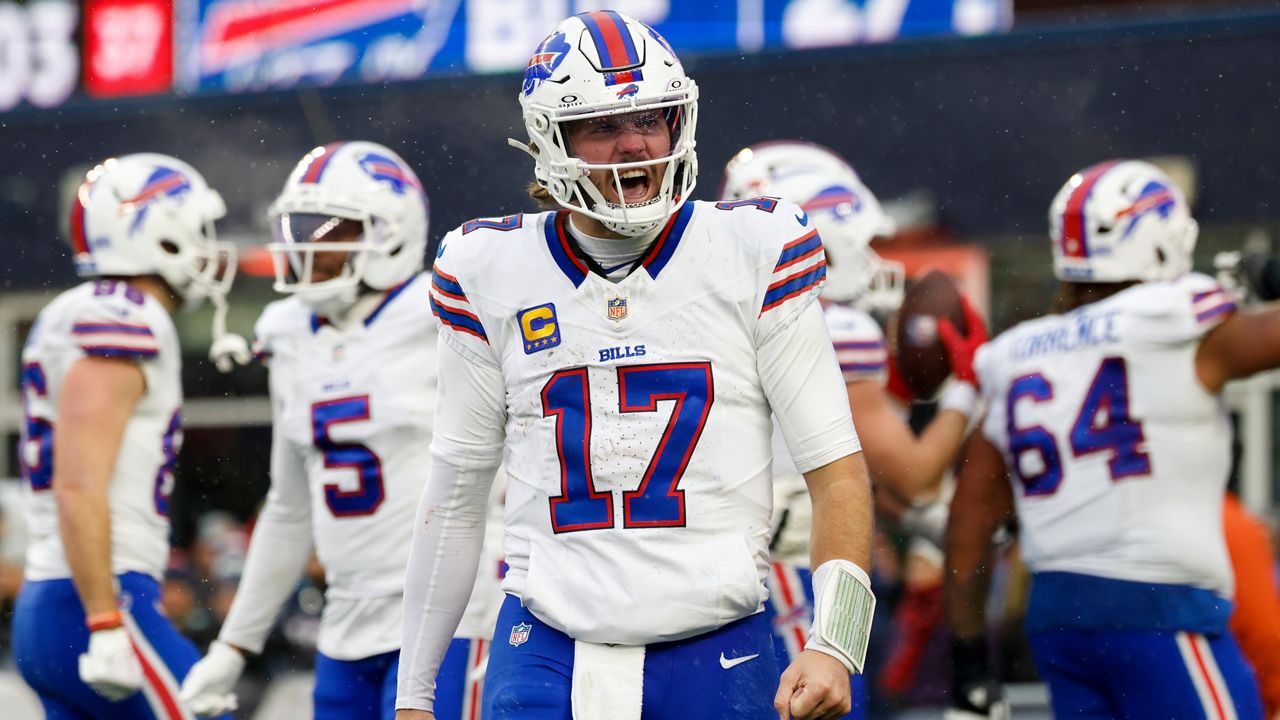
- Will the Buffalo Bills win the Super Bowl?
- Will Manchester United finish in the Premier League's top four?
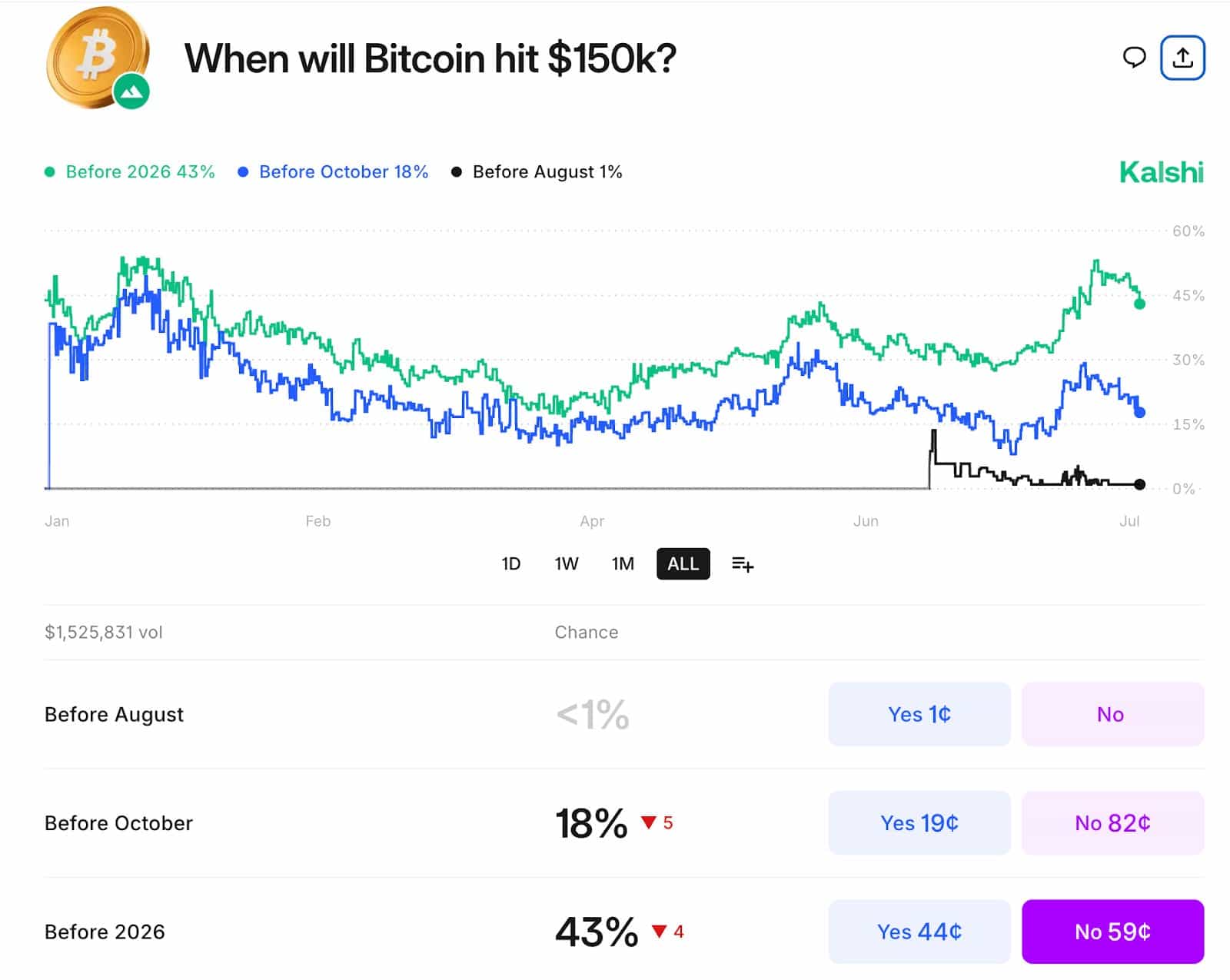
- Will Bitcoin trade above a certain price before December?
- Will a particular film win Best Picture?
Every market has a clearly defined question and a fixed resolution date. Once that date arrives, winning contracts pay out their full value, while losing contracts expire worthless. Every contract you hold eventually settles at either $0 or $1.
What makes prediction markets so compelling is what happens before the event is settled. Every trade reflects somebody's opinion, every headline changes expectations, and every new piece of information can shift prices as thousands of traders reassess the odds in real time.
Rather than relying on a single expert or analyst, prediction markets aggregate the views of an entire marketplace.
Every price is an implied probability
One of the biggest mindset shifts for new prediction market traders is understanding what the price actually represents.
A contract trading at 20 cents implies roughly a 20% chance of that outcome occurring. At 50 cents, the market sees it as an even chance. At 80 cents, it's considered highly likely, but never guaranteed.
The important word is likely. Markets don't deal in certainty, they deal in probability.
Those probabilities are constantly changing as fresh information arrives. A key player gets injured, inflation data surprises economists, a company beats earnings expectations or opinion polls shift dramatically. Within moments, traders reassess the situation and prices move accordingly.
Unlike a broadcaster or newspaper prediction, a prediction market never stands still. It's a live reflection of what participants collectively believe at any given moment.
Trading isn't about picking winners
Many beginners believe successful trading is simply about predicting the correct outcome. Experienced traders see it differently. They're searching for prices that don't accurately reflect reality.
Imagine an NFL team is trading at 15 cents to win the Super Bowl. The market believes it has around a 15% chance.
After analyzing the schedule, injuries, underlying statistics, and roster depth, you conclude their chances are actually closer to 25%. That gap is your opportunity.
You buy because you believe the market has underestimated the team's chances. If other traders reach the same conclusion, demand increases and the contract price rises. It might move from 15 cents to 20 cents.
Crucially, you don't need to wait until the end of the season. You can sell at the higher price and lock in a profit long before the Lombardi Trophy is lifted. That's one of the key differences between mainstream betting and prediction market trading.
You're not trying to guess the future perfectly. You're looking for moments when the market has temporarily mispriced probability.
Learn to think in probabilities
One of the hardest habits to break is thinking in absolutes.
- "This can't lose."
- "They're guaranteed to win."
- "There's no way that happens."
Markets punish that kind of thinking.
Experienced traders ask a different question: What are the actual odds? Every favorite loses occasionally. Every underdog wins sometimes. Even an outcome with a 90% chance of happening still fails one time in ten.
Once you begin thinking probabilistically, individual wins and losses become less emotional. A losing trade doesn't automatically mean your analysis was poor, just as a winning trade doesn't always mean your reasoning was sound.
Over time, success comes from making consistently good decisions rather than being right every single time.
Information is what moves markets
Prediction markets exist to process information. Prices react to anything that changes the probability of an event.
That could include:
- Injury reports
- Starting lineups
- Economic data
- Company earnings
- Opinion polls
- Weather forecasts
- Government announcements
- Breaking news
Some developments genuinely change the outlook. Others create emotional overreactions.

One of the most valuable skills you can develop is learning to separate meaningful information from market noise. Often the biggest opportunities appear after traders have overreacted to dramatic headlines before the market settles back toward a more realistic price.
Your biggest challenge is psychology
Prediction markets run on human behavior, which means your own emotions can become your biggest obstacle.
Confirmation bias encourages you to seek information that supports your existing opinion. Recency bias makes the latest result feel more important than the longer-term trend. Overconfidence convinces you you've mastered the market after a handful of successful trades. Fear of missing out encourages you to chase prices after they've already moved.
These biases affect everyone.
The best traders don't eliminate them completely, they build routines that stop those emotions driving every decision.
Developing an edge
Every trader talks about finding an edge.
An edge is simply a repeatable advantage that allows you to estimate probabilities more accurately than the wider market.
That advantage might come from specialist knowledge of one league, a deep understanding of economics, statistical modeling, following local politics closely or simply reacting to breaking news faster than most participants.
The strongest traders rarely try to cover every market. Instead, they specialize. Knowing one area exceptionally well is often far more valuable than knowing a little about everything.
Prediction markets involve trading, not gambling
Prediction markets are often compared to betting because both involve uncertain outcomes.
The difference lies in the mindset. A bettor asks, "Who will win?" whereas a trader asks, "Is this price wrong?"
You don't buy a contract simply because you believe it will happen. You buy because you believe the market has underestimated the probability.
Just as importantly, you're rarely locked into your position until the event finishes. If the market moves in your favor, or new information changes your opinion, you can often exit immediately.
That flexibility makes prediction markets behave much more like financial markets than traditional "betting."
Summary: Thinking like a trader
Every prediction market tells a story about what thousands of participants collectively believe at that moment. As new information arrives, that story changes.
If you're new to prediction markets, don't chase a perfect record. Focus instead on understanding probability, recognizing how markets react to information and building a repeatable decision-making process.
The best traders aren't people who always predict the future correctly. They're the ones who consistently recognize when the market's price has drifted away from reality, manage their risk carefully and stay disciplined when emotions tempt them to do otherwise.
Prediction markets reward curiosity, patience, and good judgment, not certainty. Learn to think in probabilities, protect your capital and keep refining your process, and you'll stop trying to predict the future.
You'll start thinking like a trader.
Prediction markets involve risk. This article reflects opinion and market analysis and is intended for informational and entertainment purposes only.