
Every NFL offseason a handful of star players get within touching distance of free agency, only to watch the open market disappear behind a single roster designation. The franchise tag lets a team keep one pending free agent for another season on a fully guaranteed one-year salary, with no long-term commitment attached.
Quarterbacks tagged in 2026 would earn nearly $44 million for that single season, so the money is real, but so is the frustration for players who wanted the security of a multi-year deal. Here is what a franchise tag in the NFL actually is, how the salary gets calculated, and how the 2026 tag season played out.
What is a franchise tag in the NFL?
Franchise tag basics at a glance:
- Each team can tag one pending unrestricted free agent per year
- The tag is a fully guaranteed one-year salary set by position
- It comes in two versions, exclusive and non-exclusive, plus a cheaper transition tag
- The 2026 tag window ran from February 17 to March 3
- Tagged players had until July 15, 2026 to convert the tag into a long-term extension
The franchise tag is a tool written into the league's collective bargaining agreement that prevents a player from hitting the open market just as his contract expires. Instead of testing free agency, the tagged player is bound to his current team for one more season at a salary determined by his position, whether he likes it or not. Teams use it to buy negotiating time with a star they cannot afford to lose, and players tend to resent it for the same reason, because a one-year tender carries none of the multi-year security or signing-bonus money of a long-term contract.
Exclusive vs. non-exclusive franchise tag: What's the difference?
The non-exclusive tag is the standard version, the one teams reach for in the vast majority of cases. A player tagged this way can still negotiate with other teams, but his original club holds the right of first refusal. If he signs an offer sheet elsewhere, his old team has five days to match it, and if it declines, the new team must hand over two first-round draft picks. That price is so steep that offer sheets for non-exclusive tagged players almost never happen in practice.
Where the non-exclusive tag leaves a window open, the exclusive tag shuts the door completely. The player cannot negotiate with anyone else, and in exchange the salary is calculated off the top five salaries at his position in the current year rather than a trailing average, which usually makes it the more expensive option. Teams reserve it for elite quarterbacks they cannot risk another club even talking to.
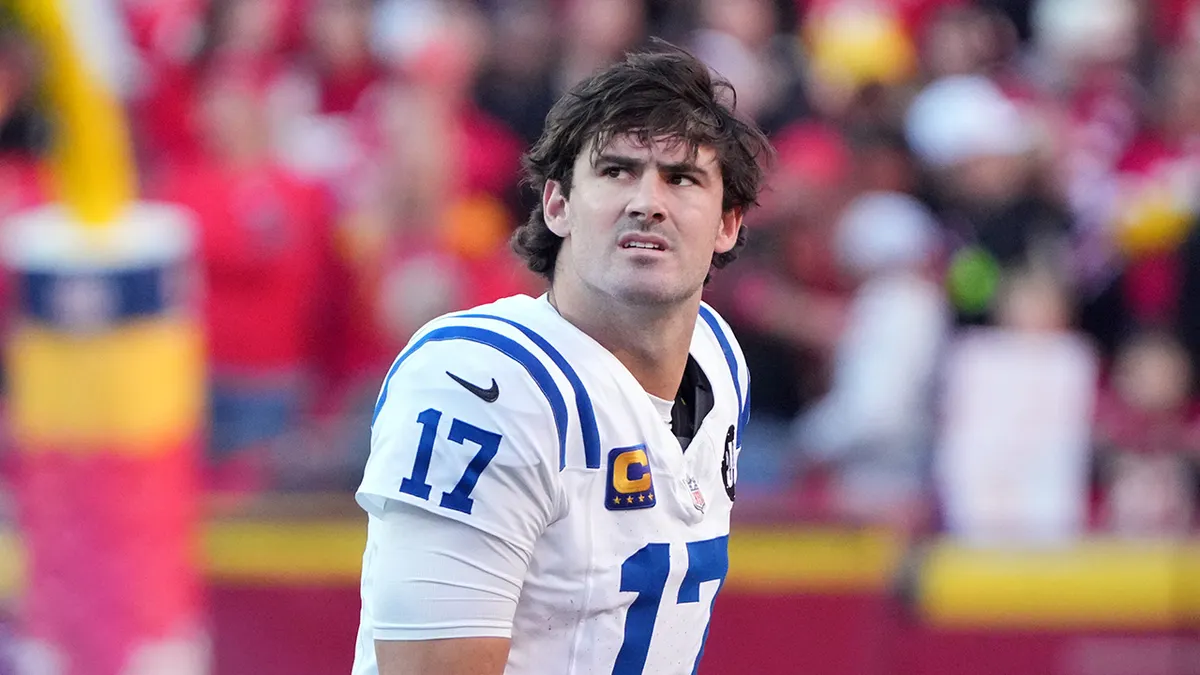
The last option is the transition tag, a cheaper version with less protection. It pays the average of the top 10 salaries at the position rather than the top five. The team can still match any outside offer, but it gets nothing back if the player leaves. That is the tag Indianapolis put on quarterback Daniel Jones in 2026.
How much does the franchise tag pay in 2026?
The non-exclusive number is whichever of two figures is higher. One is the average of the previous five franchise tags at the position measured against those years' salary caps, and the other is 120 percent of the player's prior salary. With the 2026 salary cap set at $301.2 million, the league's official tag values came out to $43.895 million for quarterbacks, $27.298 million for wide receivers, $15.045 million for tight ends, and $14.293 million for running backs, all the way down to $6.649 million for kickers and punters.
The math changes quickly when a team tags the same player twice. A second consecutive tag must pay 120 percent of the previous year's salary, which is how Cincinnati ended up paying Tee Higgins roughly $26.2 million in 2025 after his $21.8 million tag in 2024, and a third tag climbs to 144 percent. The escalators exist precisely to stop teams from tagging a star forever instead of paying him properly.
The franchise tag deadline and key 2026 dates
The 2026 tag window opened on February 17 and closed at 4 p.m. ET on March 3, a two-week stretch just ahead of free agency. Once tagged, a player and his team could keep negotiating a multi-year contract until July 15. After that deadline passes, the player can only sign the one-year tender and must wait until the following offseason to talk about an extension.
The tag is often less of an ending than a pause button. Across 2023 through 2025, 12 of the 16 tagged players signed a long-term deal while under the designation, a 75 percent conversion rate that suggests the tag mostly works as a bargaining chip on the way to a real contract.
Who received the franchise tag in 2026?
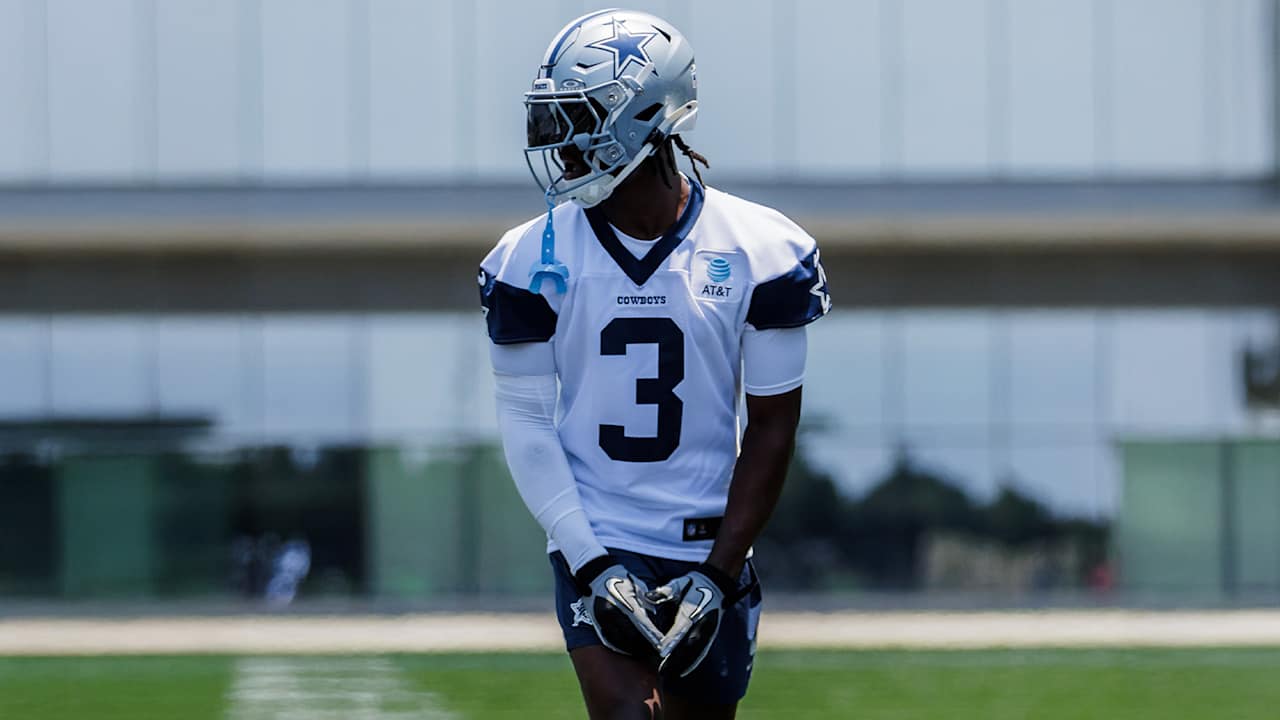
The 2026 cycle produced three franchise tags and one transition tag. Dallas applied the non-exclusive tag to wide receiver George Pickens at $27.298 million, Atlanta tagged tight end Kyle Pitts at $15.045 million, and the Jets kept running back Breece Hall at $14.293 million. Daniel Jones received the transition tag from the Colts, making him the only tagged player of the cycle free to shop for an offer sheet without draft-pick compensation hanging over the deal.
Why the franchise tag moves prediction markets
Tag decisions are among the first hard signals of an NFL offseason, which makes them useful for anyone trading on prediction markets. A tag on a star receiver props up a team's win-total probability before a single free agent signs, while a surprise decision not to tag someone tells traders that a departure just became far more likely.
The July 15 deadline works the same way, because a tagged player who converts to a long-term deal removes a chunk of roster uncertainty, and markets with enough liquidity will reprice that news within minutes, the same way live win-probability markets swing when a game reaches overtime.
NFL franchise tag FAQ
Can a team franchise tag the same player twice?
Yes, but the second tag costs 120 percent of the previous year's salary and a third costs 144 percent, so back-to-back tags get prohibitively expensive at most positions.
How many players can a team tag in one offseason?
One. A team must choose between the franchise tag and the transition tag each year and can apply it to a single pending free agent.
Can a player refuse to play on the franchise tag?
He can refuse to sign the tender, and until he signs he cannot be fined for staying away. The nuclear option is sitting out entirely, which is what running back Le'Veon Bell did for the whole 2018 season rather than play on a second tag.
Is the franchise tag guaranteed money?
Yes. Once the player signs the tender, the full one-year salary is guaranteed, which is the tag's one genuine perk for the player.